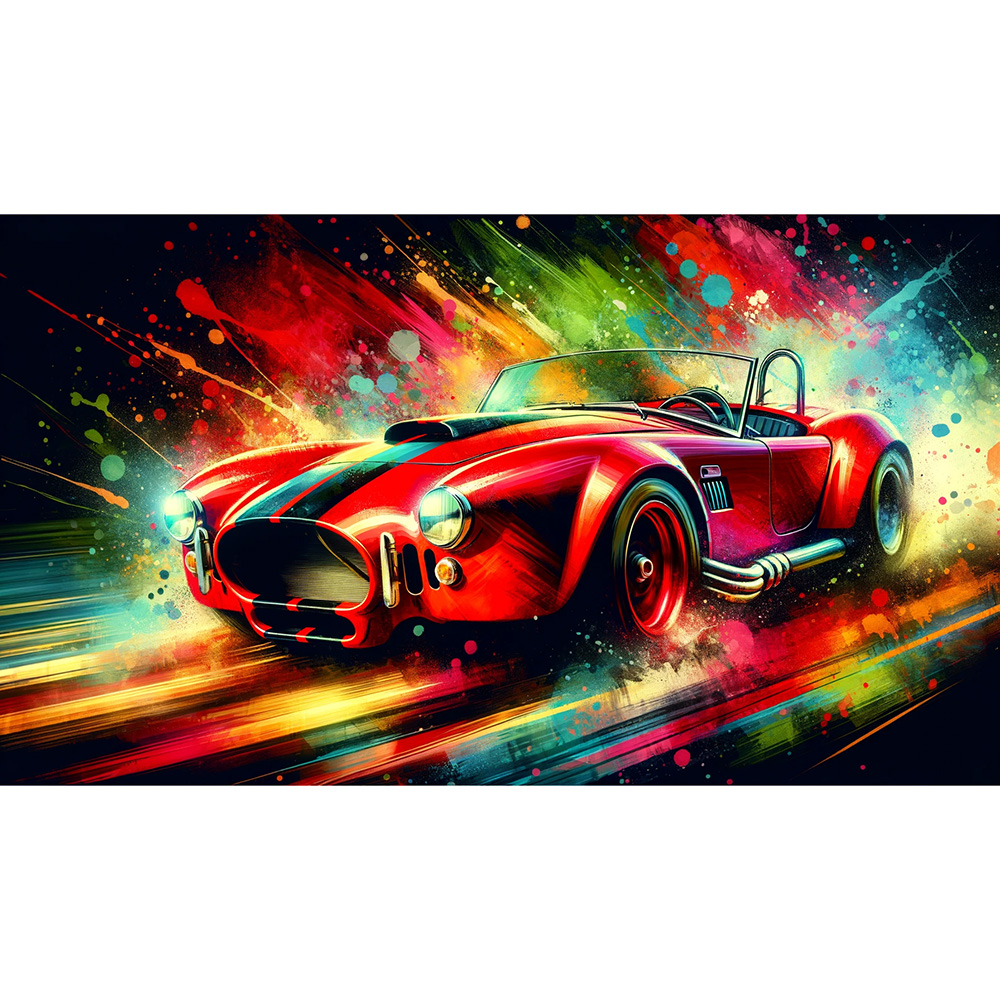
This digital art print is an imagination of a Toyota Supra Japanese super car street racer speeding down the wet city streets.
A great high quality print for any jap car enthusiast.
The print is supplied to fit all standard frame sizes but some cropping will occur dependant on size chosen – we NEVER crop the main feature image
All prints are manufactured to order and printed on a state of the art 12 colour Epson high quality printer and printed on premium semi-gloss photo paper.
Smaller prints are dispatched flat in board envelopes whilst larger prints are dispatched rolled in tubes.
Purchase PrintJapanese street racing history is a captivating narrative that intertwines cultural phenomena, technological innovation, and societal shifts. Spanning decades, it embodies a subculture born from the vibrant streets of Japan, evolving into a global phenomenon that left an indelible mark on automotive culture.
The origins of Japanese street racing can be traced back to the post-World War II era when Japan experienced rapid economic growth and a burgeoning car culture. As the country rebuilt itself, young enthusiasts, inspired by Western films and the allure of speed, began modifying their vehicles for performance. This grassroots movement laid the groundwork for what would later become a full-fledged subculture.
In the 1970s, the rise of Japanese manufacturers like Toyota, Nissan, and Honda fueled the enthusiasm for racing. The introduction of iconic models such as the Nissan Skyline, Toyota Supra, and Honda NSX provided enthusiasts with affordable platforms for customization and performance tuning. These cars became symbols of Japan’s engineering prowess and captured the imagination of a generation.
However, it was in the bustling streets of cities like Tokyo and Osaka where street racing truly thrived. The neon-lit avenues and winding mountain roads became the stage for adrenaline-fueled showdowns between rival crews. Midnight races, known as “hashiriya,” became a clandestine ritual, where drivers pushed themselves and their machines to the limit in pursuit of victory and glory.
The emergence of video games like “Tokyo Xtreme Racer” and anime series like “Initial D” further popularized Japanese street racing culture, transcending geographical boundaries and captivating audiences worldwide. These media representations showcased the raw energy and intensity of street racing, immortalizing iconic cars and racing techniques in the collective consciousness.
Despite its allure, Japanese street racing also faced challenges and controversies. The illegal nature of the activity led to clashes with law enforcement, resulting in crackdowns and stricter regulations. Fatal accidents and injuries sparked debates about safety and responsibility within the community, prompting some to advocate for organized racing events and dedicated racing circuits.
In response to these challenges, organized racing circuits such as Tsukuba Circuit and Ebisu Circuit gained prominence, providing legal venues for enthusiasts to test their skills and compete in sanctioned events. These circuits became hubs for innovation and experimentation, fostering a community of passionate drivers and engineers dedicated to pushing the boundaries of automotive performance.
The turn of the millennium brought both new opportunities and new challenges for Japanese street racing culture. The popularity of drifting, a driving technique characterized by controlled slides through corners, surged both in Japan and abroad, thanks in part to events like the D1 Grand Prix and the Fast and Furious movie franchise.
Today, Japanese street racing culture continues to evolve, influenced by changing trends, technological advancements, and shifting societal attitudes. While the golden age of midnight racing may have faded, the spirit of innovation and camaraderie that defined it lives on in the hearts of enthusiasts around the world.
In retrospect, Japanese street racing history is a testament to the enduring appeal of speed and adrenaline, as well as the resilience of a community bound together by a shared passion for automotive culture. From its humble beginnings on the streets of post-war Japan to its global impact on popular culture, the legacy of Japanese street racing will continue to inspire generations of enthusiasts for years to come.